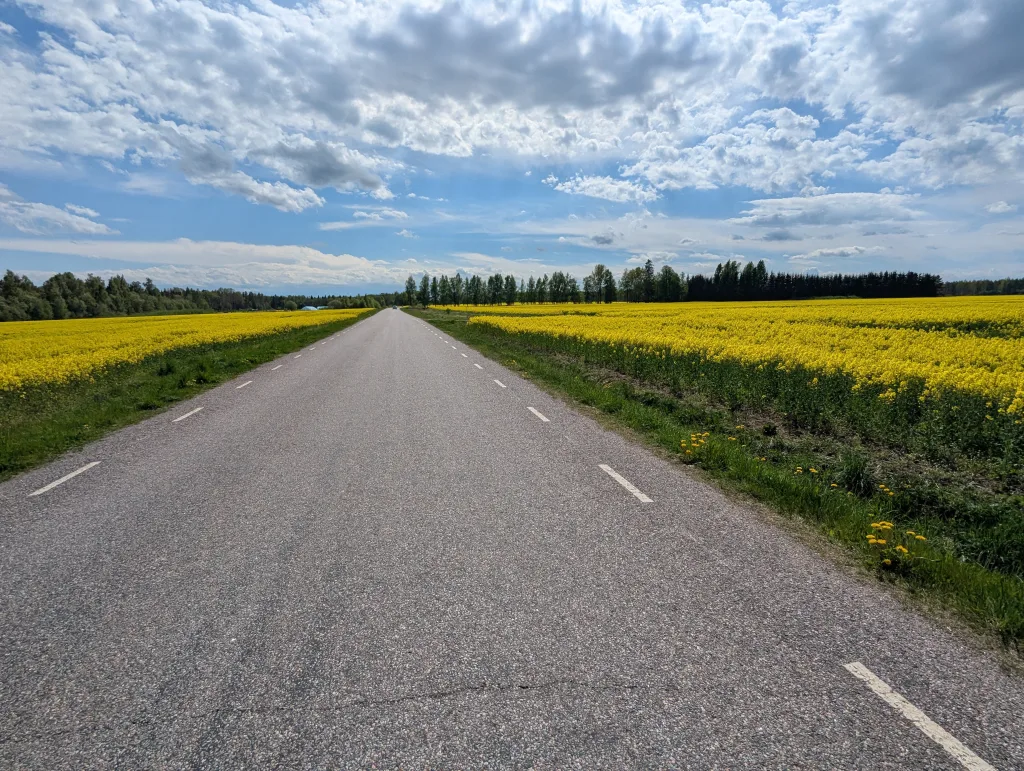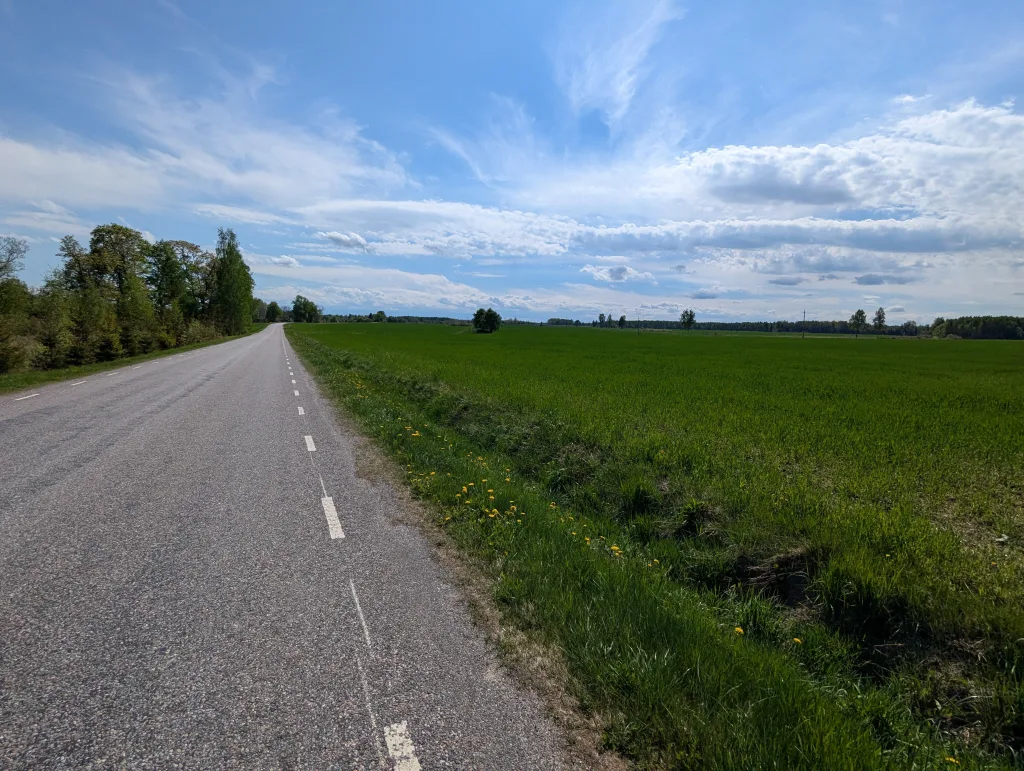

Finally having my own bike with me in Estonia, I could no longer resist the urge to head out for a full-day ride. Since my Conway is a gravel setup, I wanted a route that offered a balanced mix of off-road terrain and smooth road cycling. I settled on a loop: a gravel-heavy path suggested by Komoot to get me out to the coast of Lake Peipsi, and a pure road route to spin back home.
I rolled out of Tartu heading east, passing the massive concrete canopy of the Estonian National Museum (Eesti Rahva Muuseum).
Located on a former Soviet airfield, the ERM is Estonia’s largest museum. Its striking 350-meter-long building is designed to look like a runway taking off into space, housing vast exhibits on Finno-Ugric cultural history.
Almost immediately after clearing the museum grounds and heading toward Möllatsi, I hit my first major roadblock. The map showed a continuous, standard gravel road cutting straight through the area. In reality, I was stopped by a solid red metal barrier. Next to it were several signs written exclusively in Estonian, clearly stating that entrance was prohibited because they were farming peat there.
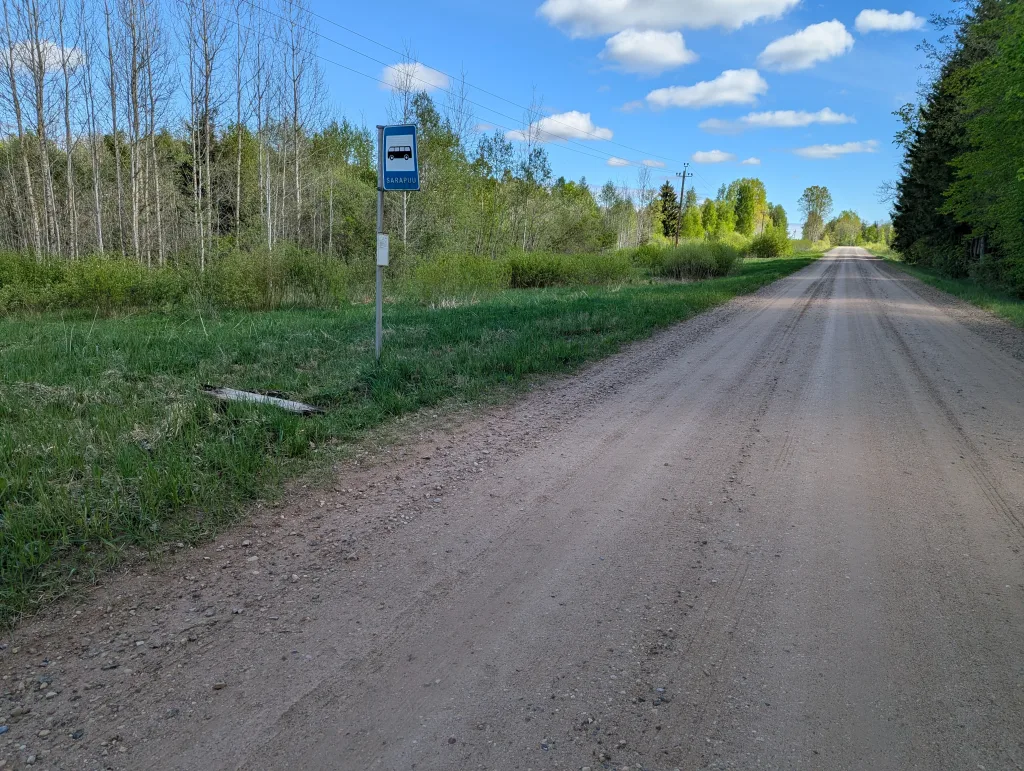
Looking down at my Garmin, the alternative route options all required a significant amount of backtracking and a massive detour. Since it was a Saturday, I gambled on the likelihood that the industrial site was quiet for the weekend. I lifted the bike over and made a quick, uninterrupted two-kilometer dash straight through the active peat harvesting fields. Everything went fine, and once I cleared the area, I continued on with normal cycling.
Gravel and Off-Road Detour
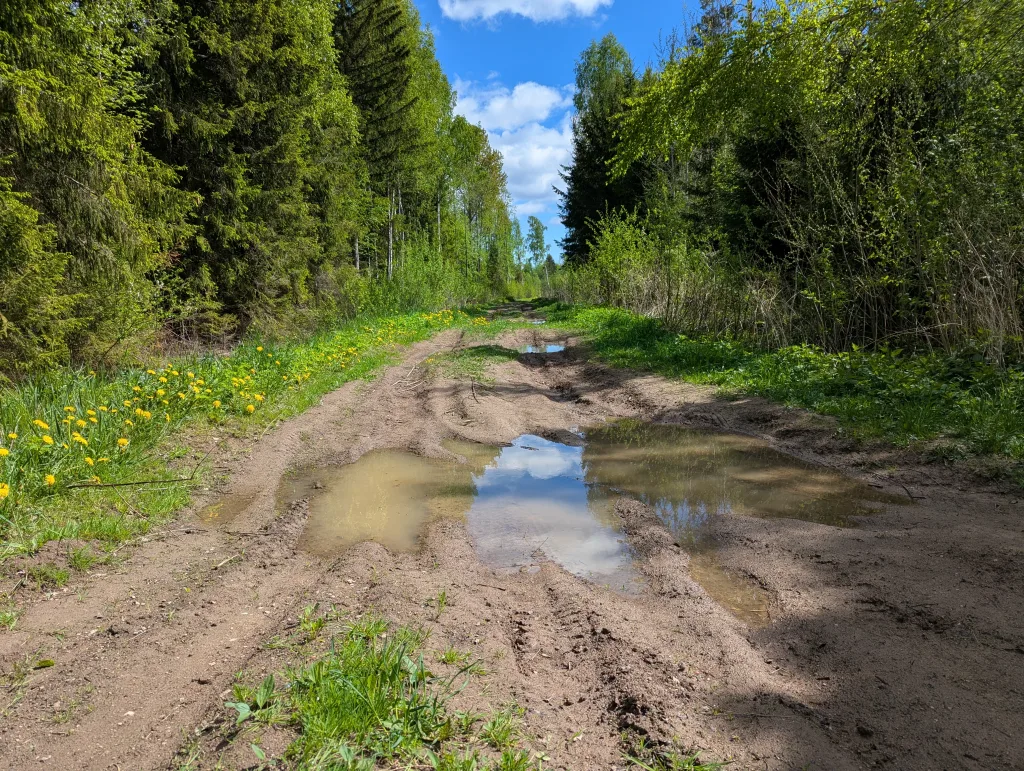
As the ride progressed, the standard gravel trail eventually changed its texture for the first time. Instead of smooth gravel, I hit a muddy section covered in deep, water-filled ruts that required some focused line choice to avoid slipping. After navigating through the mud, the terrain returned completely back to normal, and I enjoyed another stretch of smooth gravel riding.
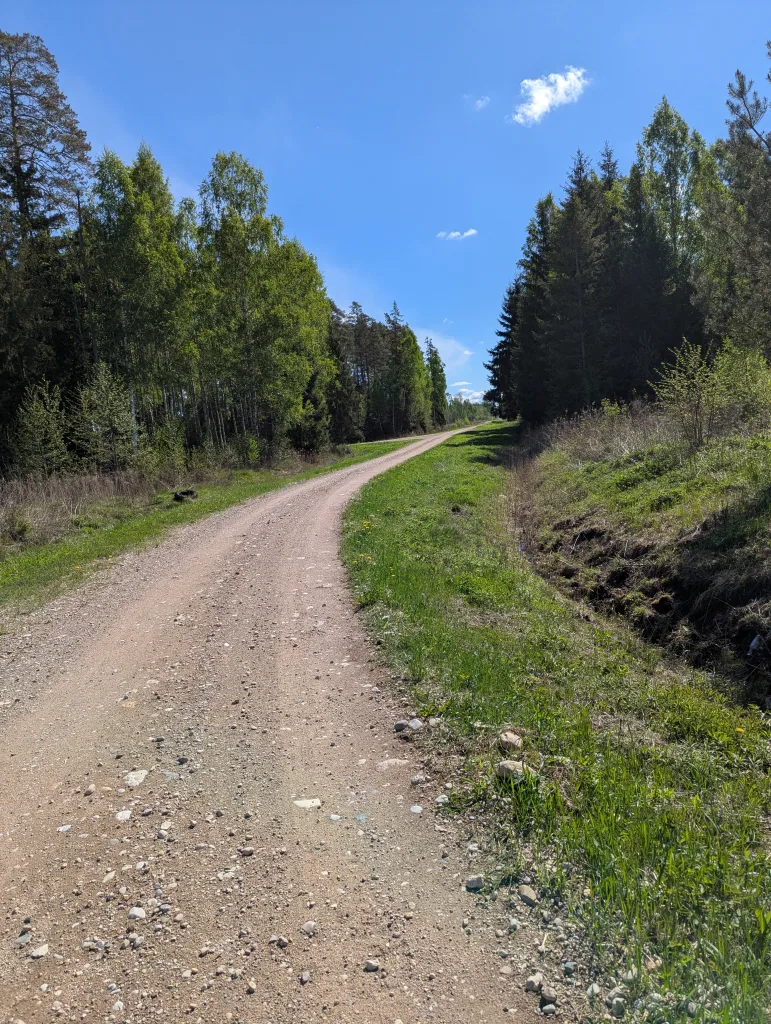
Further along, however, Komoot’s routing logic got increasingly adventurous. Instead of keeping me on the smooth public gravel roads, the app directed me onto tracks that were more like regular forest roads where vehicles only occasionally drive. These roads became more and more overgrown as I pushed forward.
After a while, the track narrowed down until it looked like a simple footpath. Once I encountered a series of fallen trees completely blocking the path, I decided to call it, backtrack, and look for an alternative route on the map. The alternative I found turned out to be quite smooth compared to the overgrown forest track, making it easily rideable all the way into town.
Arrival at Kolkja
I finally broke out of the woods and arrived in Kolkja, rolling straight down to the local beach to get my first proper look at Lake Peipsi.
Lake Peipsi is the fifth-largest lake in Europe, acting as a massive natural border between Estonia and Russia. The western shore is famous for its unique “Onion Route” villages, home to Russian Old Believer communities who settled here in the 18th century to escape religious persecution.
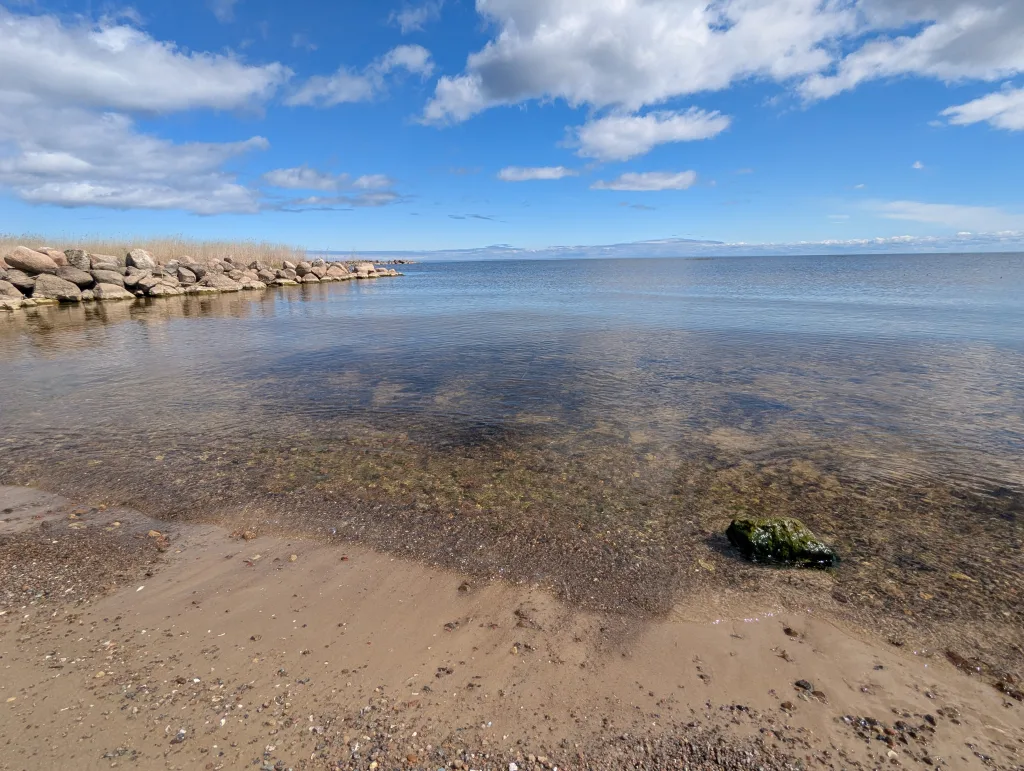
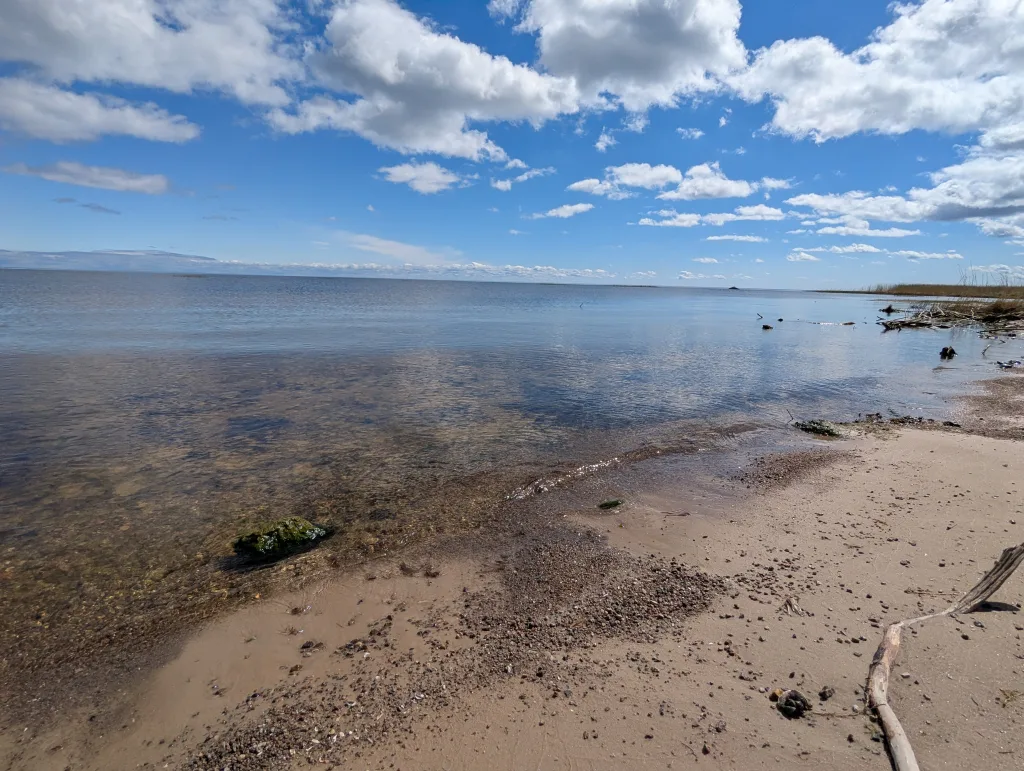
Down by the water, I ran into an elderly man and his very young granddaughter. Language barrier hit instantly—they spoke Russian, so communication was tough. I tried my best to explain in broken Estonian that I was a student living in Tartu, and the grandfather tried to tell me something too, but we couldn’t quite bridge the gap. Meanwhile, the little girl was busy throwing sticks and stones into the massive lake, gesturing firmly that she wanted me to join in and throw some with her.
After saying goodbye, I pedaled over to a nearby wooden birdwatching tower on the edge of the wetlands, climbing up to get an elevated view across the water toward the horizon.
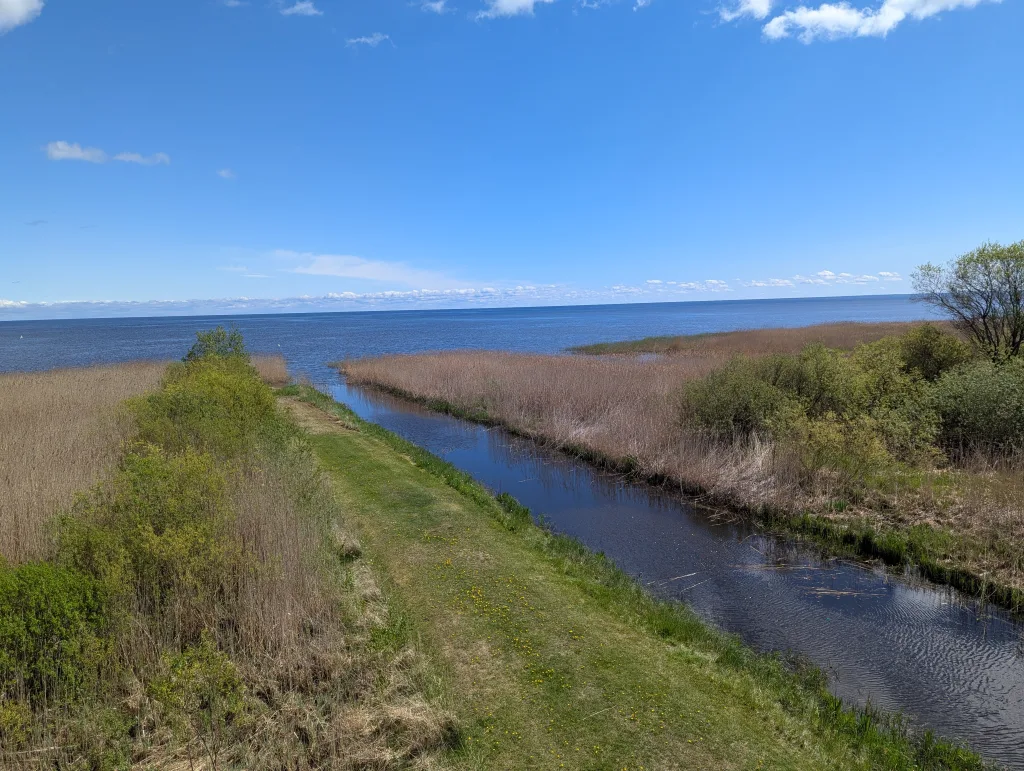
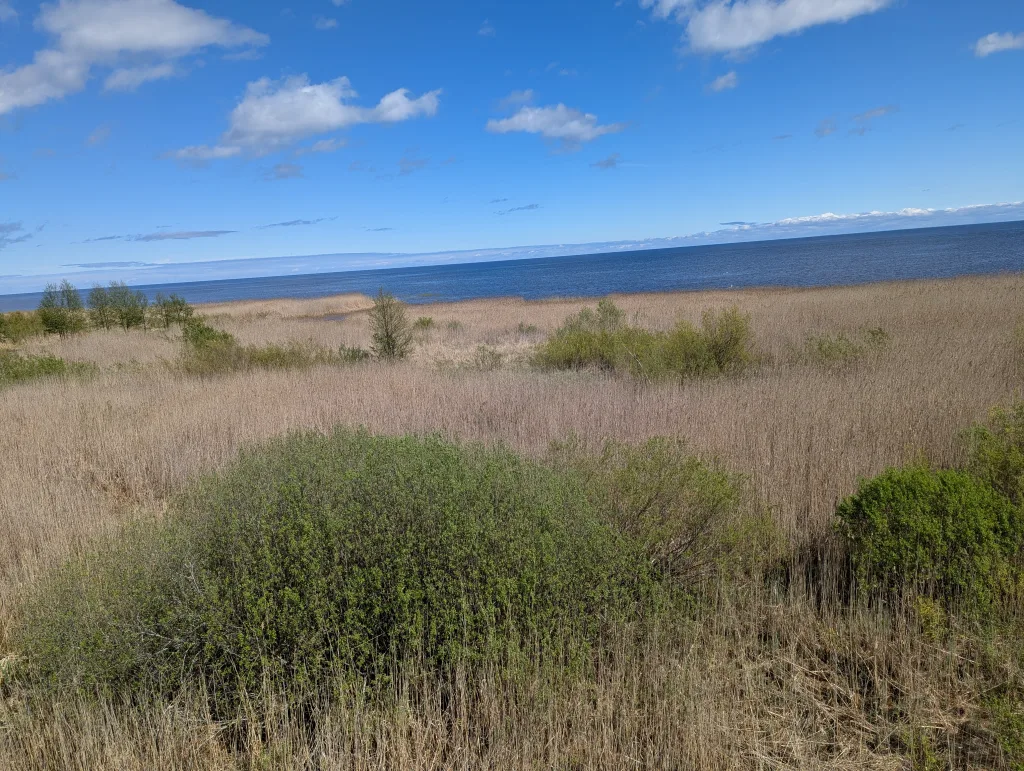
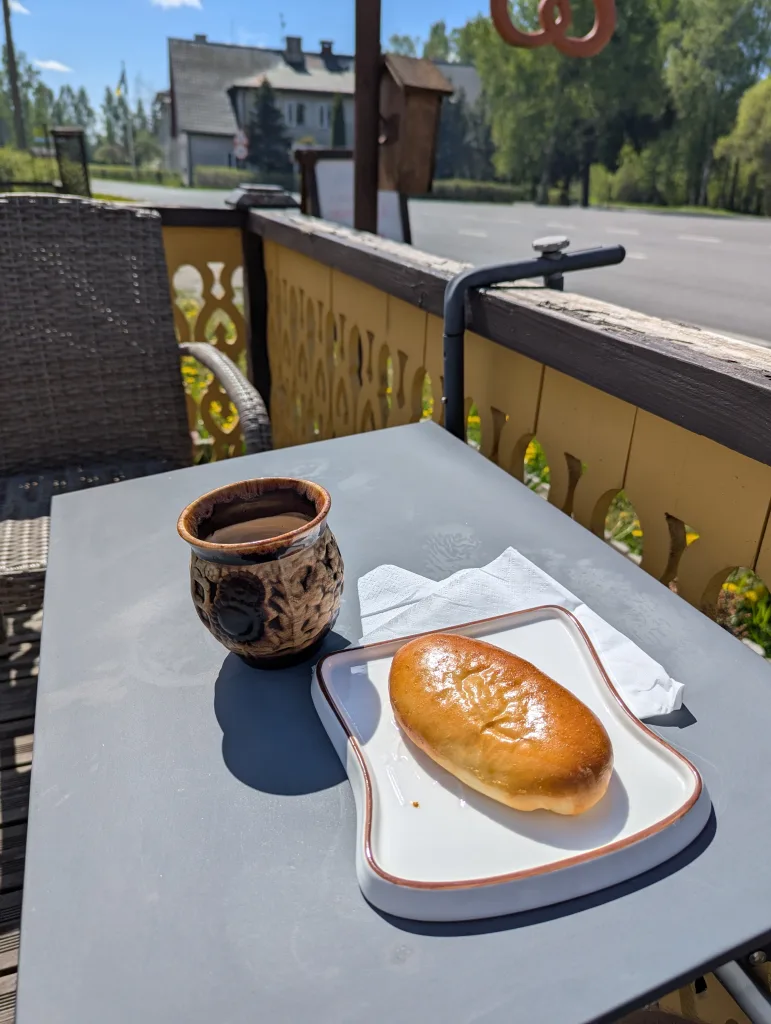
By this point, I was ready for lunch. I tracked back to a small café I had spotted on the way into the village called Prääniku Tareke. I stopped in for a coffee and some local snacks, used the break to fully refill my water bottles, and geared up for the return leg.
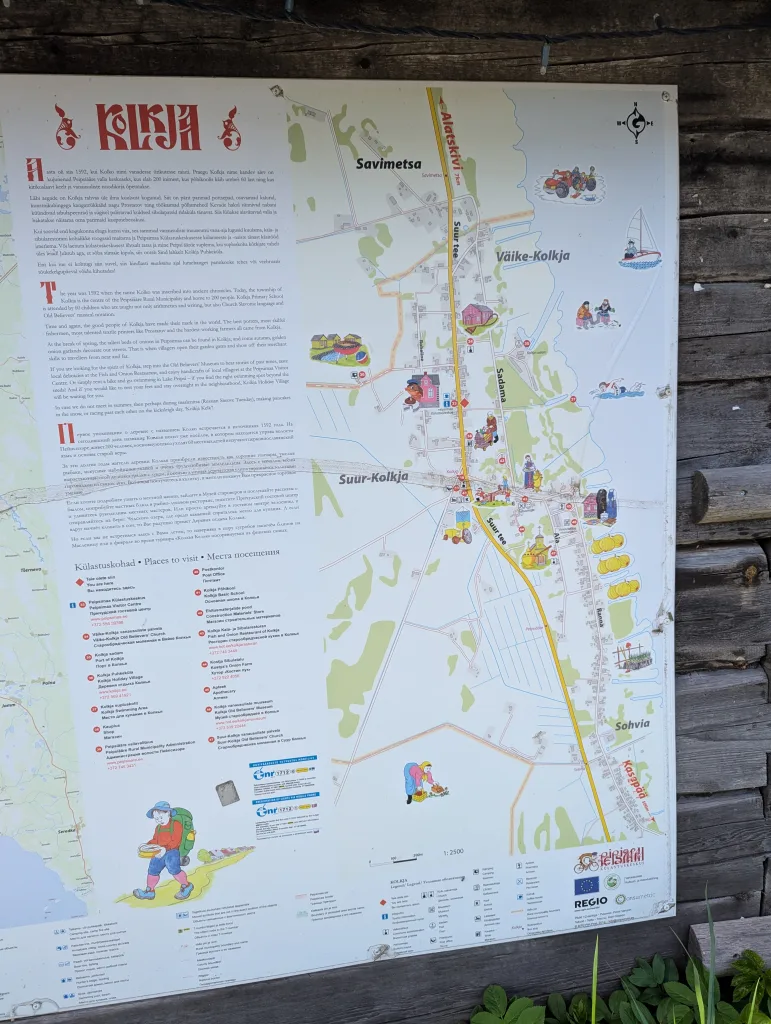
The Onion Route
For the ride back to Tartu, I swapped to the asphalt. I started by cycling south directly along the lakeside road before eventually cutting west inland.
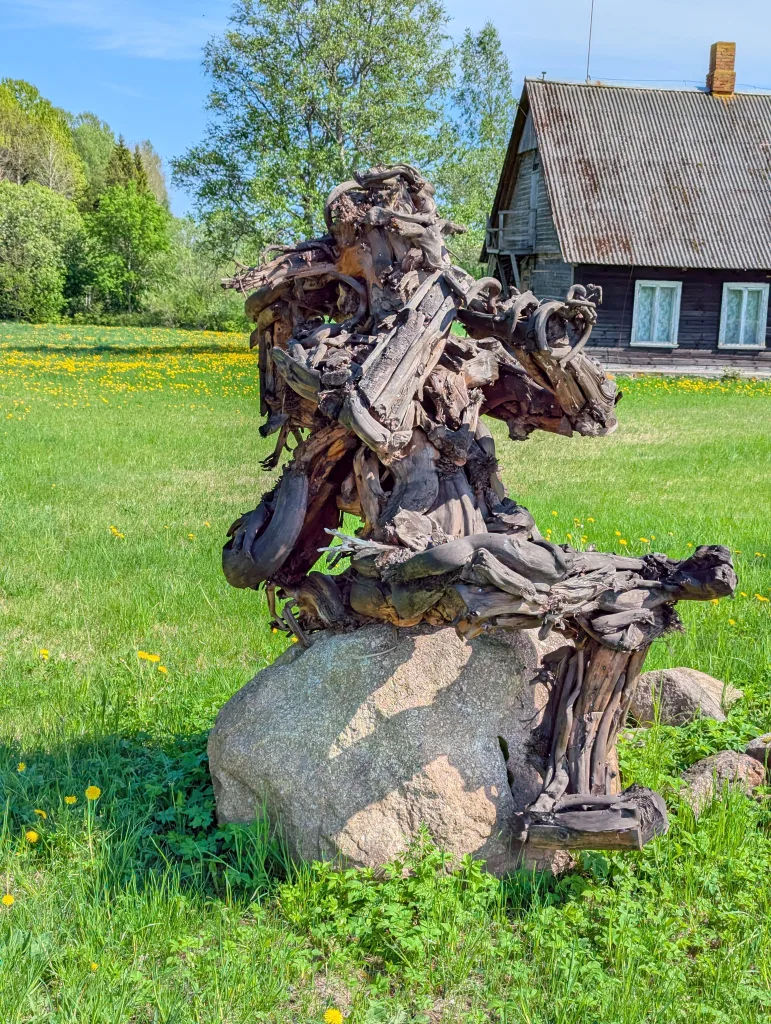
Riding through the linear villages was fascinating—the local architecture is completely distinct, with old timber houses built tight against the single main road, many featuring traditional long greenhouses for growing the region’s famous onions.
The biggest shock, though, was the sheer quality of the road infrastructure. The asphalt was pristine, smooth, and completely silent. In almost 45 kilometers of riding back to Tartu, I was overtaken by a grand total of eight cars. The return leg was entirely uneventful, but after fighting overgrown singletracks and peat bog barriers earlier in the day, spinning through the absolute peace and quiet of the Estonian countryside was a perfect end to the loop.