

We had to wake up early on Day 4 because there are only three ferries a day from Hiiumaa to Saaremaa. We were aiming for the first one at 8:15 AM, which meant covering about 10 kilometers to the port. Because of her knee, Rike mentioned her maximum speed would be around 15 km/h, so she left about 15 minutes early while I was still busy packing. Once my bags were on the bike, I rode a bit faster to catch up with her, and we made it to the ferry terminal on time.
A few minutes after the boat departed, we watched another car pull up to the closed terminal gate. They were just a few minutes late and now had to wait hours for the next crossing. We grabbed our morning coffee on board and enjoyed the trip over to Saaremaa.
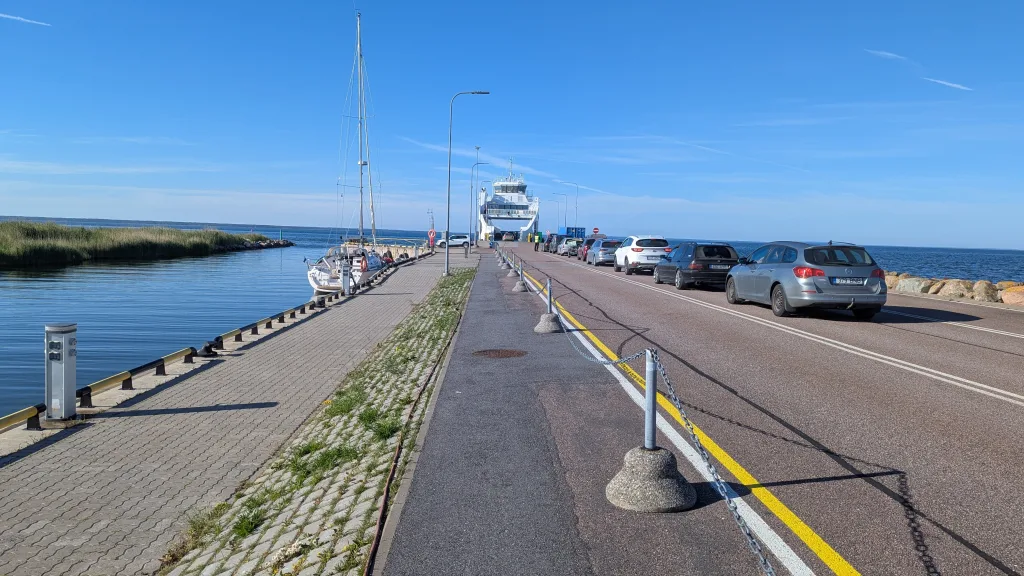
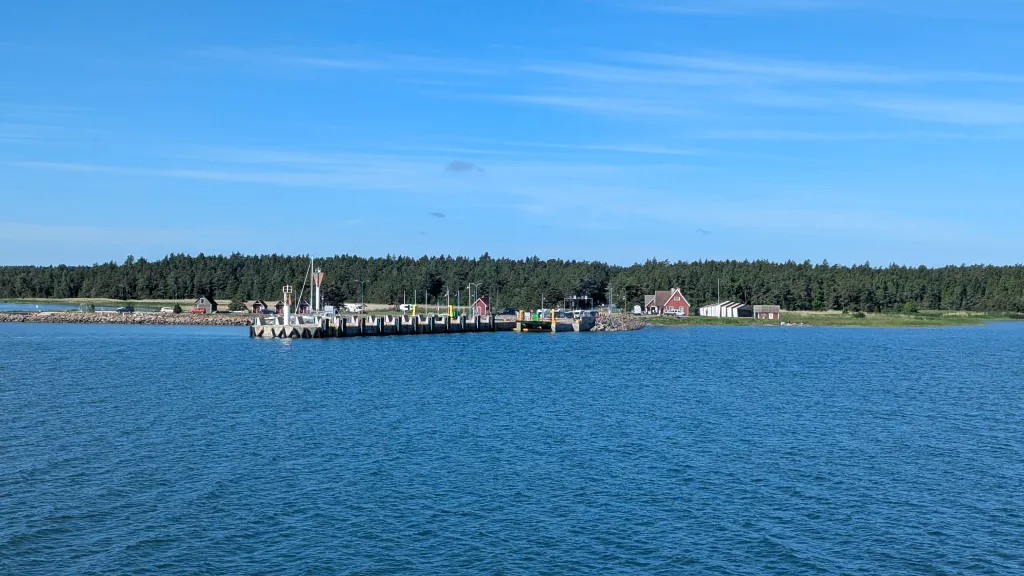
After disembarking at Triigi, we headed straight to the Angla Windmill Park.
Angla is home to the only windmill hill on Saaremaa that has preserved its original layout. Out of the five windmills standing here, four are traditional Estonian trestle windmills—wooden structures built on a central axis so the entire building can be rotated into the wind. The fifth is a larger, stone-based Dutch-style windmill built in 1927.
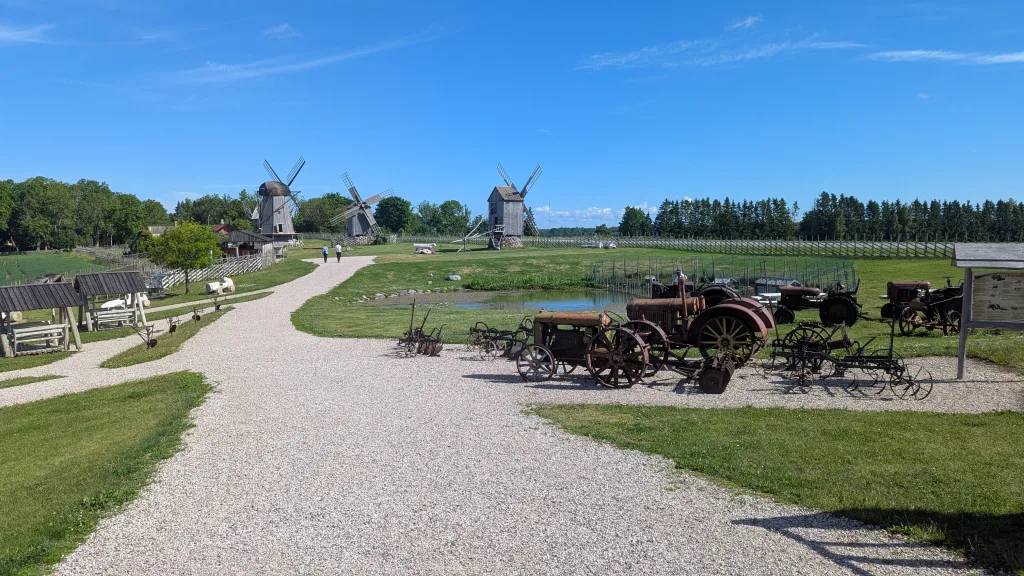
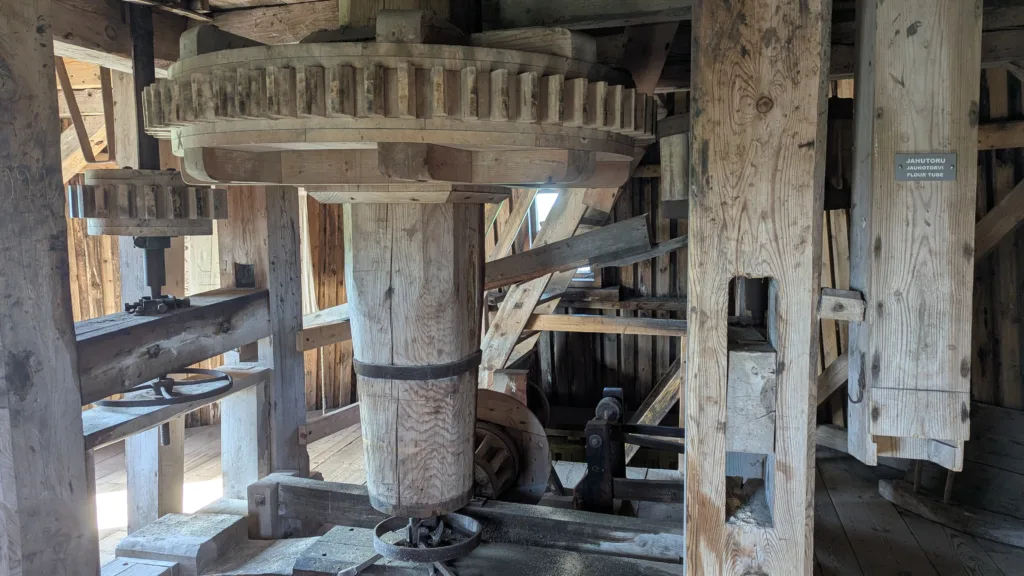
We walked around the grounds to look at the collection of ancient farm machinery, including a Fordson tractor from 1917, and climbed inside the two windmills that are open to the public to see the wooden internal gear systems.
While walking around the park, I noticed that my foot was starting to hurt. The day before, when climbing down the steep steps of the Kõpu lighthouse, I had felt a sharp pain, but didn’t think much of it. Walking around Angla in stiff, unpadded cycling shoes made it clear that an old metatarsal injury from running was flaring up again.
We stopped at the on-site café for pancakes and coffee before setting off through the Saaremaa countryside.
Unlike the day before, where I just stopped at a random bus shelter for lunch, we looked at the map and found a proper spot directly on our route: Kaarma Church.
Dedicated to Saints Peter and Paul, Kaarma Church was built in the late 13th century (around 1261) right next to an ancient Estonian hill fort. It is famous for its unique, high-vaulted two-aisled nave and incredibly detailed medieval stone carvings near the altar, which are considered some of the finest examples of early Gothic art in Estonia.
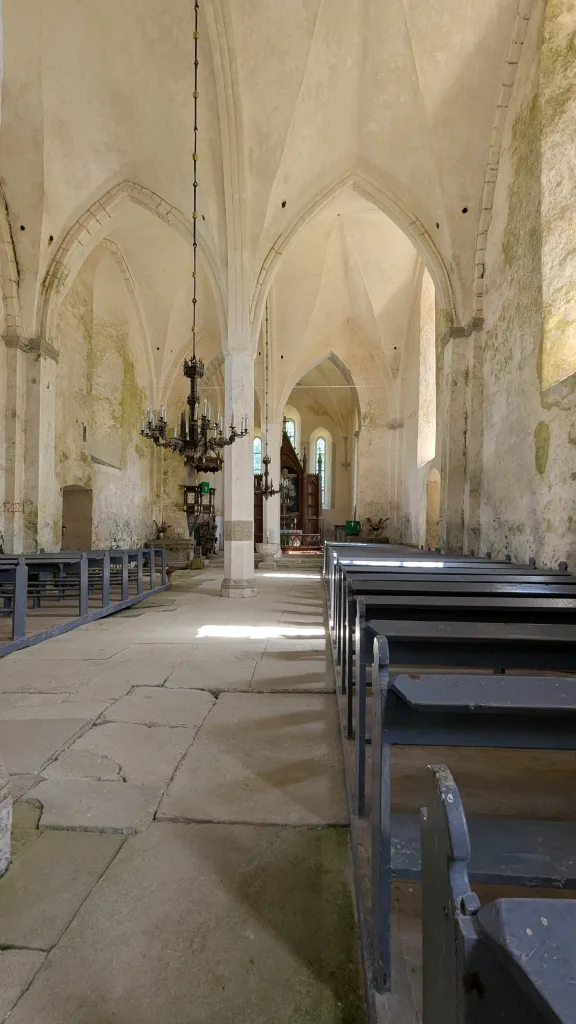
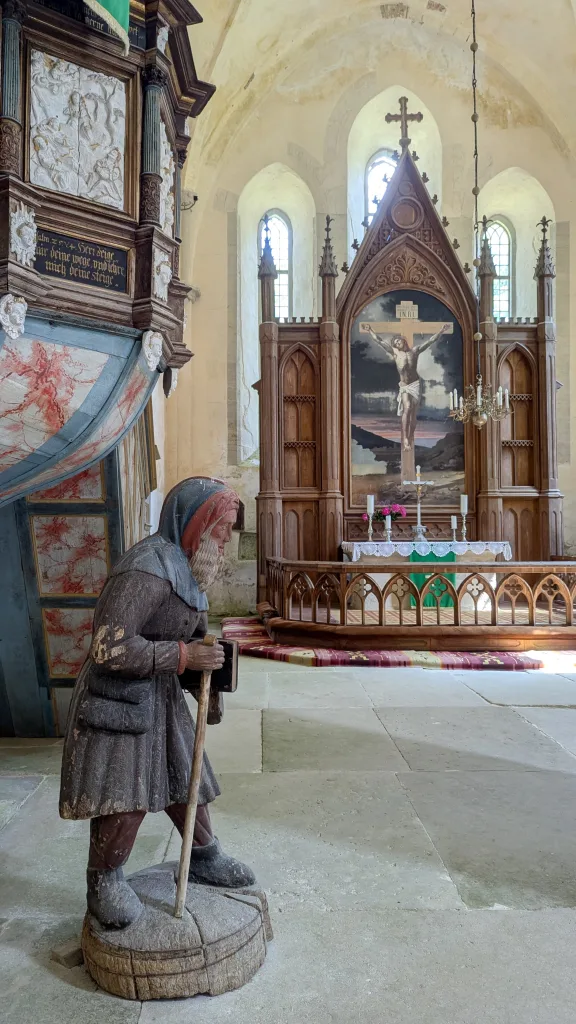
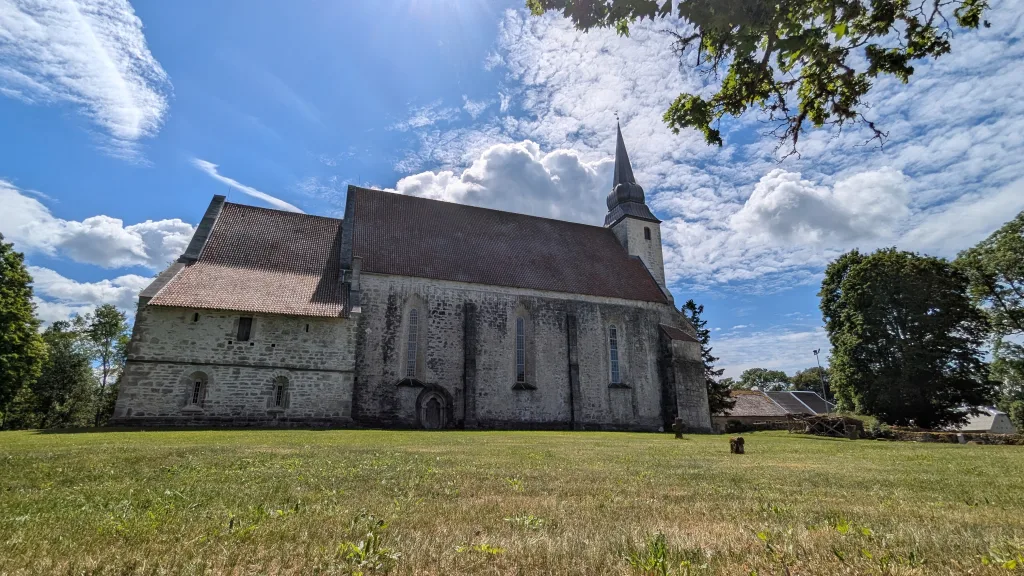
After visiting the quiet interior, we sat in the shade nearby to eat our packed lunch. We spent the rest of the afternoon cycling through the countryside until we reached Salme. We originally intended to buy groceries for dinner at the local store, but we saw a place called Viking Burger right across the street. We opted for convenience and got a Jalapeño burger with fries instead.
From Salme, it was a short 7-kilometer stretch to our accommodation: Anseküla Teelistemaja, which features small, round wooden cabins to sleep in. Since we arrived fairly early, we paid a €25 surcharge to use the sauna. The owner prepared it for us and fired it up until it reached a solid 100°C.
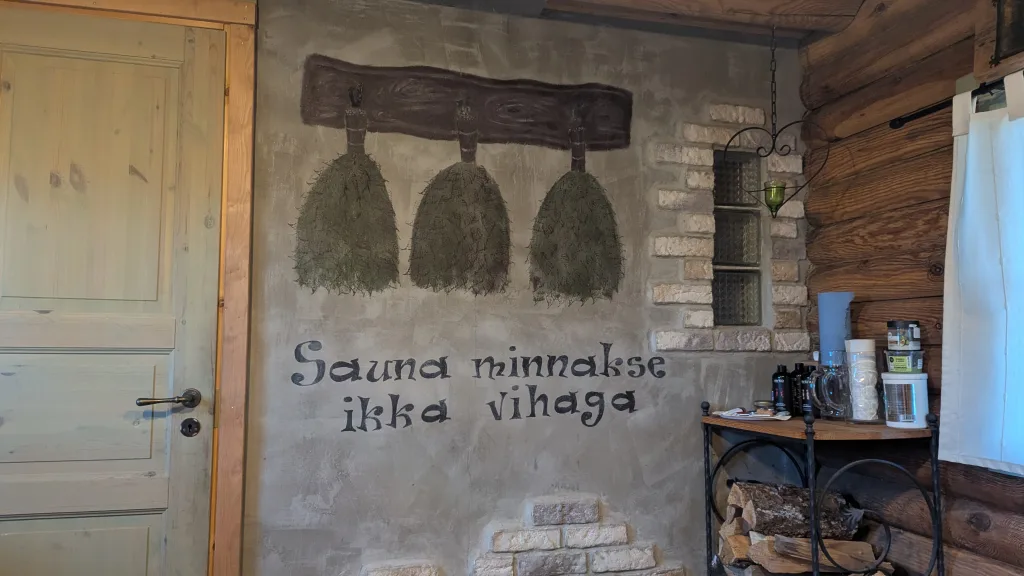
While waiting for the sauna to heat up, I worked on my bike. The chain hadn’t been running smoothly since the deep sand on Day 1. My initial cleanup with water, dish soap, and paper towels helped, but a lot of grime and fine sand had built up over the last few days. Since I didn’t have any proper degreaser with me, I decided to flush the chain with oil.
First, I scraped off the sticky mixture of oil and sand that had collected on the components. Then, after three rounds of flushing the links with fresh oil and wiping it down, the chain was running much smoother.
By evening, my foot injury was worsening, but the hot sauna was a great way to end a long day of travel.